
If you’re wondering, “Is stimming normal?” the short answer is yes. Many autistic and non-autistic people use repetitive movements, sounds, or sensory actions and most stimming doesn’t need to stop just because it looks different. Instead, it comes down to understanding what your child’s stimming is doing for them, especially if the behavior involves safety, pain, or major disruption to daily life.
What Is Stimming?
Stimming is short for self-stimulatory behavior. It describes repetitive actions, sounds, or movements that a person may use for sensory stimulation, emotional regulation, enjoyment, concentration, or relief from stress.
Many people stim. Someone might twirl their hair, tap a pencil, bounce a leg, drum their fingers, or pace while thinking. Autistic children and autistic adults may stim more often or more visibly, particularly when they need more sensory input or feel overwhelmed.
Autism diagnostic criteria include restricted or repetitive patterns of behavior, interests, or activities. These include repetitive motor movements, repeating words or phrases, strong routines, intense interests, and different responses to sensory experiences. Stimming can fall within this broader group of repetitive behaviors, but stimming alone doesn’t establish an autism diagnosis.
What Do Stimming Behaviors Look Like?
Stimming behaviors vary from one person to another. A child may use more than one type, and the same stim may appear when they’re calm, excited, anxious, focused, or overwhelmed.
Common stimming behaviors include:
- Movement or vestibular stimming: body rocking, pacing, spinning, flapping hands, or finger flicking
- Auditory or vocal stimming: humming, making repeated sounds, tapping objects, or repeating words
- Tactile stimming: rubbing certain textures, tapping fingers, or hair twirling
- Visual stimming: watching lights, spinning objects, or repeated visual patterns
- Other sensory stimming: sniffing objects or repeatedly seeking a particular sensation
These types of stimming reflect different forms of sensory input. Auditory stimming involves sound, tactile stimming involves touch, and visual stimming involves sight. The same repetitive movement may serve different purposes at different times.
Hand flapping, for instance, may accompany excitement in one moment and stress in another. Understanding stimming means looking at the behavior in context rather than assuming the movement itself tells you how your child feels.
Is Stimming Normal for Autistic Children?
Yes. Stimming in autism is common, and repetitive movements form part of the diagnostic criteria for autism spectrum disorder. Stimming also occurs outside the autism spectrum, so a child who rocks, taps, hums, or repeats an action isn’t necessarily autistic.
For many autistic individuals, stimming works as a form of self-regulation. It may give the person predictable sensory input, release physical tension, express intense emotions, or make overwhelming sensory input easier to manage.
Research gives parents more context for why these behaviors may occur. In one study, autistic adults describing their experiences with stimming said it helped them regulate emotions and cope with overwhelming experiences. More recent research also found higher sensory sensitivities among autistic adults than non-autistic adults, with sensory sensitivities closely associated with repetitive motor behaviors.
If your child’s stimming is safe and isn’t preventing them from taking part in daily activities, there may be no reason to change it and you may still notice that the behavior becomes more frequent or intense in certain situations.
Why Does Stimming Increase With Stress or Sensory Overload?
A noisy room, an unexpected change, excitement, anxiety, physical discomfort, or sensory overload may trigger stimming or make existing stimming behaviors more intense. Some autistic people also stim when they’re happy, focused, or simply enjoying a sensory experience.
The situation around the behavior can offer useful context. A child who rocks back and forth in a crowded room may be responding to overwhelming sensory input, while a child who hums during schoolwork may use auditory stimming while concentrating. If your child’s stimming changes noticeably, consider what else has changed, including sleep, pain, noise, transitions, stress, or routine.
Social pressure can affect stimming too. Research with autistic adults has found that stigma around repetitive behaviors may lead people to suppress or mask them, which can contribute to stress and anxiety. The neurodiversity movement has also challenged stigma around autistic behaviors and encouraged greater acceptance of differences that do not cause harm.
When Is Stimming Normal, and When Does It Need More Attention?
Most stimming is harmless; however, parents should look more closely when repetitive behaviors create a safety concern, cause injury, or regularly stop a child from taking part in necessary daily activities.
Seek guidance when your child’s stimming:
- Causes self-injury, such as repeated head banging, biting, or skin damage
- Places your child or another person in danger
- Regularly interferes with eating, sleeping, school, communication, or daily routines
- Appears alongside pain, severe distress, or a major change from your child’s usual behavior
When a stim becomes harmful, focus on what may be driving the behavior rather than suppressing the repetitive action without addressing its purpose.
How Should Parents Respond to Stimming Behaviors?
Start with observation rather than correction. Notice what happens before the stim, where it occurs, and what seems to change afterward. This gives you a better understanding of whether your child seeks sensory input, responds to stress, expresses emotion, or tries to regulate an uncomfortable environment.
Punishment doesn’t address the reason behind stimming and may add distress without addressing what triggered the behavior. Environmental changes may make a bigger difference when noise, lighting, crowds, or other sensory experiences contribute to sensory overload.
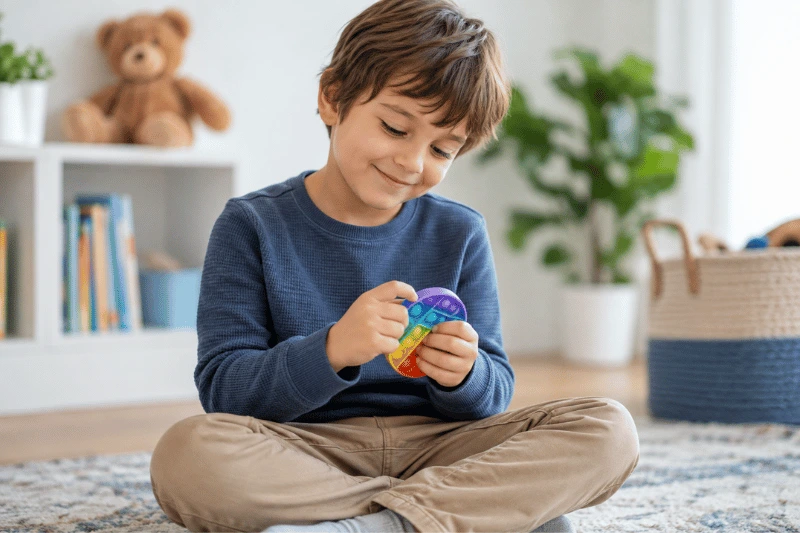
When a stim creates a safety problem, a safer alternative may meet a similar sensory need. Fidget toys, stress balls, a fidget spinner, movement breaks, or another appropriate sensory activity may work for some children.
Some children may also work on self-management skills when intense stimming affects safety or daily routines. The goal should remain specific to your child. Addressing head banging that causes injury is very different from teaching a child to hide healthy stimming because other people notice it.
How Does ABA Therapy Address Stimming?
ABA therapy at IABS starts with an assessment of your child’s current skills, needs, routines, and family priorities. A BCBA develops individualized treatment goals from that assessment rather than assuming that every repetitive behavior needs intervention.
When stimming involves injury, safety, communication, or major disruption to everyday routines, the clinical team can look at what happens around the behavior and decide with the family whether it belongs in the treatment plan. Goals might focus on safer alternatives, communication, environmental changes, or self-management skills rather than simply stopping repetitive actions.
IABS works with children through in-home ABA therapy in Virginia and Maryland and center-based ABA therapy at clinics in Herndon and Manassas.
Understanding What Your Child’s Stimming Means
So, is stimming normal? Yes. Stimming is a common form of repetitive behavior among both autistic and non-autistic people. It can serve many purposes, including helping with sensory regulation, concentration, emotional expression, enjoyment, or stress.
Safe stimming typically does not need to be changed simply because others notice it. However, if your child’s stimming causes injury, creates a safety concern, or significantly interferes with daily activities, it may be helpful to look at what happens before, during, and after the behavior. Understanding these patterns can provide valuable insight into what your child may be communicating or experiencing.
At Integrated Autism Behavior Services (IABS), we provide individualized ABA therapy for children with autism throughout Virginia and Maryland, including Herndon and Manassas, Virginia, and Frederick, Maryland. Our team includes Board Certified Behavior Analysts (BCBAs) and Registered Behavior Technicians (RBTs), and treatment begins with an individual assessment with family involvement throughout the process.
If you have questions about your child’s stimming or are wondering whether a particular behavior may benefit from support through ABA therapy, we’re here to help. Request a consultation with IABS to learn more about individualized support for your child and family.
Frequently Asked Questions About Stimming
Is stimming always a sign of autism?
No. Autistic people may stim more frequently or visibly, but non-autistic people also use repetitive movements and actions. Stimming alone does not indicate an autism diagnosis.
Should I stop my child from stimming?
Safe stimming usually does not need to stop. If a behavior causes injury, puts your child or someone else at risk, or significantly interferes with daily activities, speak with an appropriate clinician about what may be contributing to the behavior.
Can stimming be harmful?
Most stimming is harmless. Behaviors such as repeated head banging, biting, or other actions that cause injury require closer attention. The response should focus on safety and understanding what is happening around the behavior rather than simply trying to stop it.
Can ABA therapy address stimming?
ABA therapy may address stimming when the behavior relates to safety, injury, communication, or significant disruption to daily routines. A BCBA should assess the behavior and develop individualized goals with the family rather than treating harmless stimming as something that automatically needs to change.